Prestige Luxury Travel
The Prestige Luxury Travel Team
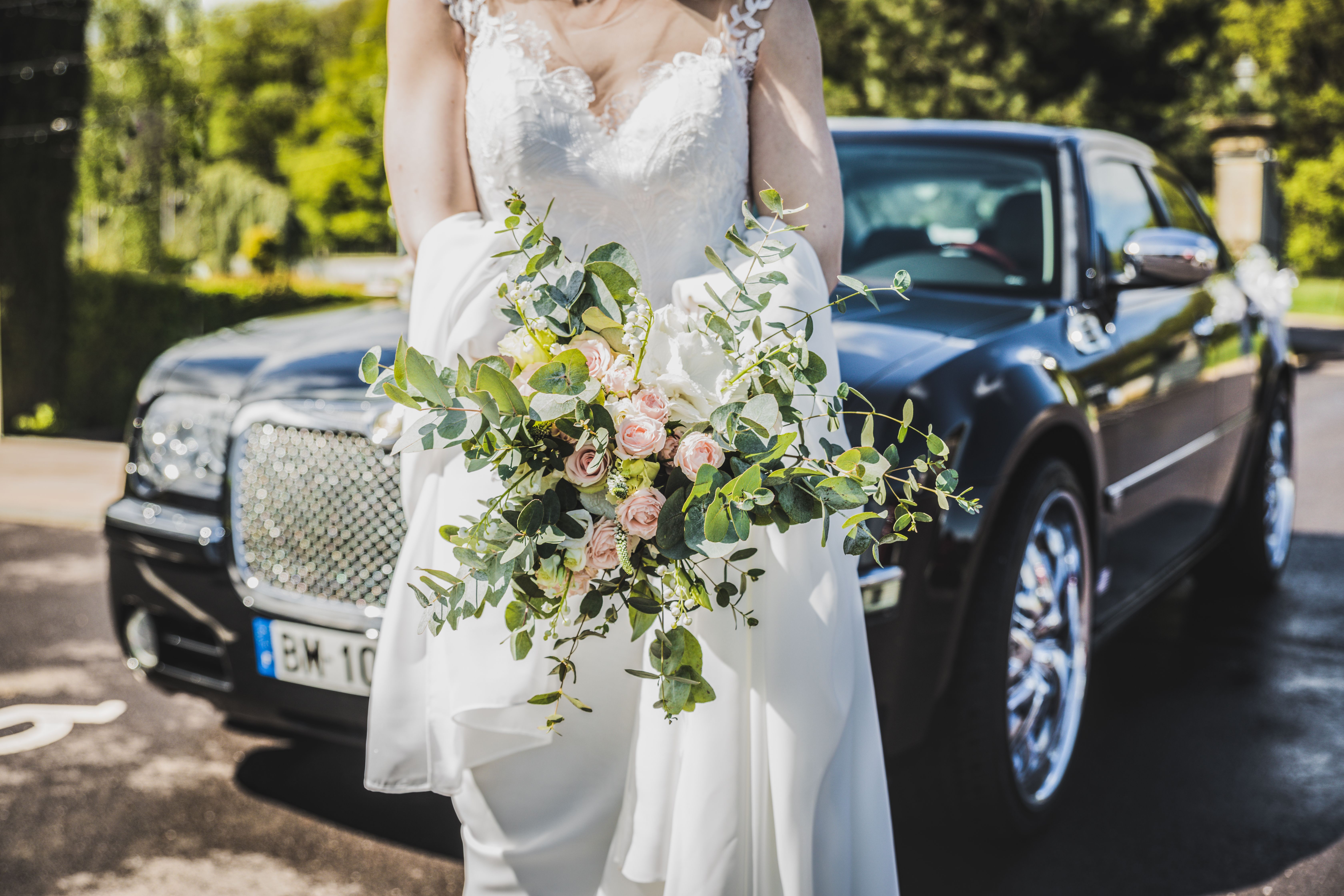
Choose the venue first, then the car. A grand house with a long approach rewards a large, formal car that can be seen coming. A narrow historic street rewards something more compact that can actually stop where you need it. The car that photographs best is usually the one that fits the setting rather than the one that looks most impressive in isolation.
Why should the venue decide the car?
Because the venue decides everything the car has to do. It sets how far the car travels on private ground, where it can stop, how long it can wait there, how tight the turns are, and what sits behind the car in every photograph. A car chosen without reference to any of that can still be the wrong choice even when it is a beautiful car.
The good news is that this is an easy question to answer once you have picked the venue, and any supplier who knows the area should be able to answer it for you in a sentence or two.
Grand estates and long private drives
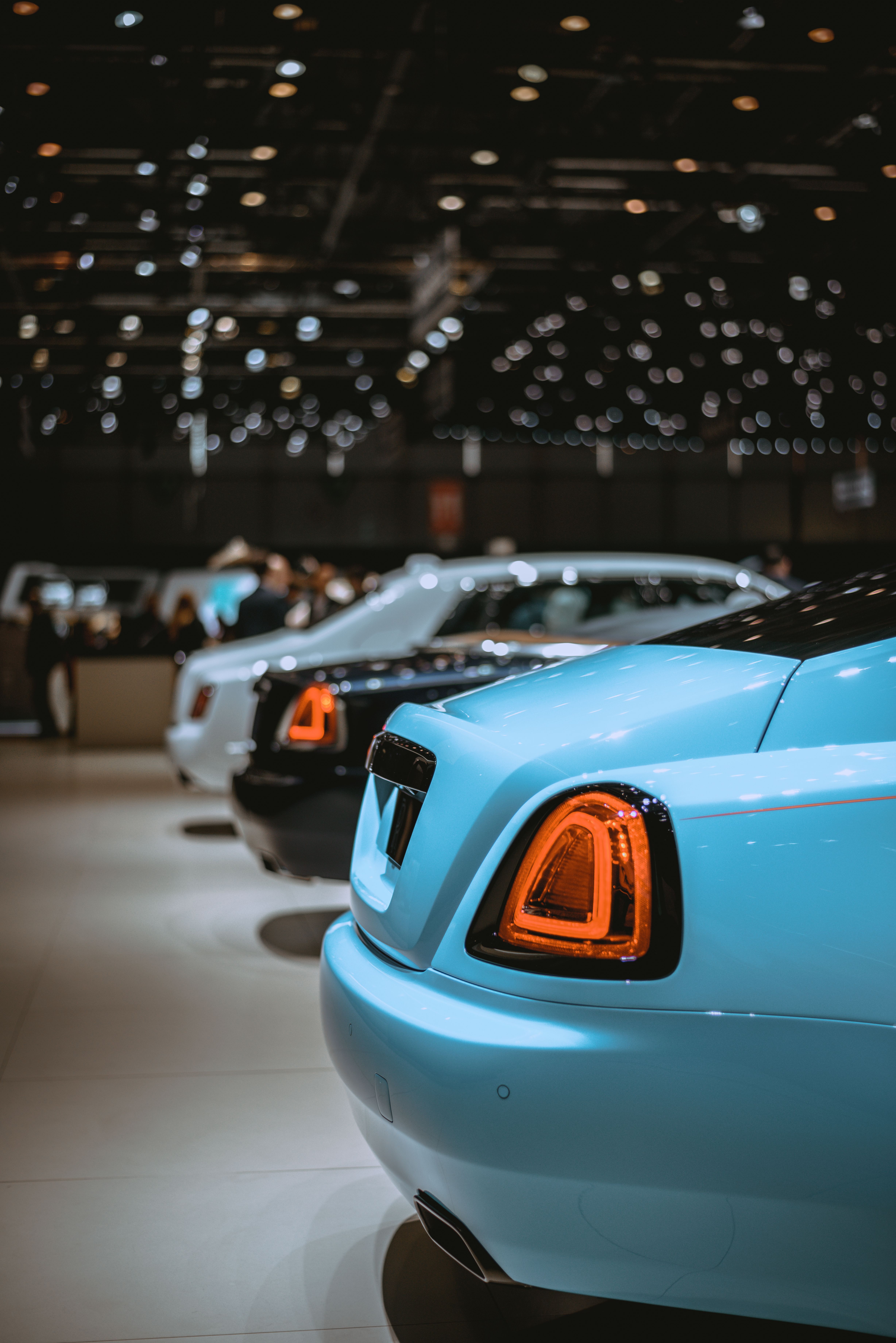
Estate venues are where the largest, most formal cars belong. A long approach gives the car time to be seen, and the scale of the house needs a vehicle that does not look lost in front of it. This is the classic setting for a Rolls-Royce Phantom, which has the presence to hold its own against a large facade.
The practical considerations are drive width, surface and turning space. Many estate drives are single track with passing places, and gravel needs a gentler approach than tarmac. Cars are usually staged in a designated area and called forward rather than waiting at the entrance, so arrivals do not congest the drive.
Historic city centres and narrow streets
Cathedral cities and old market towns are the opposite problem. The setting is beautiful and the access is difficult: conservation-area streets, restricted waiting, pedestrianised approaches, and sometimes a market day that changes the traffic pattern entirely.
Here a slightly more compact car is the more practical choice, and the Rolls-Royce Ghost photographs every bit as well as its larger sibling while being easier to place on a tight street. We compare the two in detail in our guide to the Phantom and the Ghost. The other half of the answer is planning: a timed drop-off with the car repositioning afterwards, rather than assuming it can wait outside.
Country houses and rural lanes
Rural venues are usually lovely and occasionally awkward to reach. Narrow lanes with high hedges, blind bends and no passing places make the journey in more demanding than the venue itself, particularly when several cars are travelling together.
The car matters less here than the route and the timing. What matters is a chauffeur who has checked the approach rather than trusting a postcode, because rural addresses are among the least reliable for satellite navigation and a wrong turn in a lane with nowhere to turn round is expensive in minutes.
Modern hotels and banqueting venues
Purpose-built venues are the easiest of all, with proper forecourts, clear entrances and space to manoeuvre. The complication is volume rather than access: at a large venue your cars share the entrance with guests arriving at the same time.
That makes arrival timing the thing to get right, and it is where the car choice opens up. A formal Rolls-Royce suits a traditional arrival, while for a bolder entrance the Mercedes-AMG G 63 or a car from our wider fleet can be the more characterful choice.
Barn and marquee weddings
Rural barns and marquee weddings combine the rural approach problem with an unmade surface at the end of it. Field parking, temporary trackway and soft ground after rain are all normal, and they are worth mentioning when you book rather than discovering on the day.
A car with more ground clearance is genuinely the sensible answer in these settings, which is one of the few cases where the practical choice and the striking choice are the same vehicle.
What if you have two venues?
Two venues is the most common arrangement of all, and it is where a single car choice has to serve two different settings. A church ceremony followed by a country-house reception, or a register office followed by a hotel, means the car has to work outside a narrow street in the morning and a long drive in the afternoon.
In practice the more constrained of the two venues should decide the car, because a compact car looks perfectly good at a grand venue while a large car simply may not fit a tight one. The other consideration is the journey between them: if the gap is short, the car may need to complete the transfer and return, which is a timings question rather than a car question.
What should you check with your venue?
Four questions cover almost everything:
- Where exactly can the car stop, and for how long?
- Is the approach private drive, public street, or unmade ground?
- Are there height, width or weight restrictions on the access?
- Where do cars wait between the ceremony and the reception?
Ask your venue, then tell your car supplier the answers. Any supplier worth booking will take it from there and confirm the arrangement with the venue directly. Tell us your venue and we will plan the arrival around it, whether that is an estate, a city-centre ceremony or a marquee in a field. You can see the full range on our wedding car hire page.